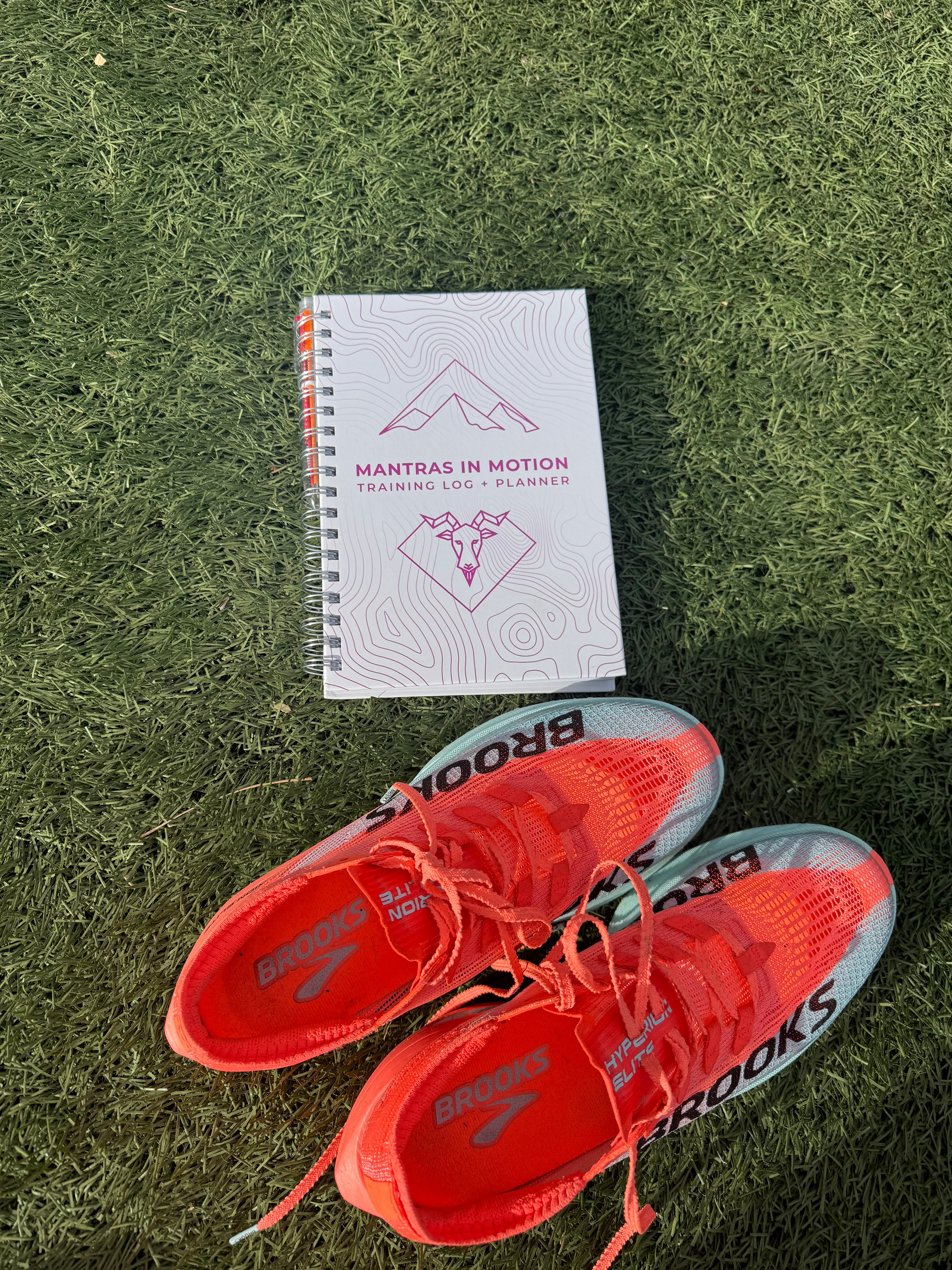
Confidence Is Built in Practice
The Mental Tools Behind This Training Block

One of the biggest shifts I’ve made in this marathon training block isn’t physical, it’s mental.
Not in a flashy way. Not in a “believe harder” way.
But in a very intentional, very practiced way.
I’ve learned (sometimes the hard way) that motivation doesn’t magically appear when things get hard. Confidence doesn’t show up on race day if you haven’t practiced it beforehand. And resilience isn’t something you summon, it’s something you build, quietly, through repeated choices.
This training cycle has been about showing up for the parts that expose me. The parts I’m not naturally good at. The parts I used to avoid.
Below are the exact mental performance tools I’m using right now—both for marathon prep and for life beyond sport.
1. Reframing Is a Skill (Not a Personality Trait)
Reframing gets misunderstood as forced positivity. That’s not what this is.
For me, reframing is about choice.
It’s noticing the language that shows up automatically, and deciding whether it’s helping or hurting.
When I catch myself thinking:
“This is the thing I’m bad at.”
I practice shifting it to:
“This is the thing that I’m not good at, yet” or ““I’m learning something I didn’t know yet.”
Same situation. Different nervous system response.
The goal isn’t to convince yourself everything is easy. It’s to move out of threat mode and into curiosity.
Practice this:
Write down one thing in training (or life) you’re currently resisting.
Then ask:
What am I avoiding practicing right now?
How could I practice this consistently to make it feel easier ?
2. Naming Fear Before It Runs the Show
Fear doesn’t disappear when you ignore it. It just gets louder in the background.
One thing I’ve started doing, especially before workouts or situations that feel exposing, is a quick fear inventory.
I ask myself:
What am I actually afraid of here?
Is this fear about safety… or about identity?
Am I afraid of failing, or of being seen trying?
Most of the time, it’s the last one.
Naming fear gives it shape. And once it has shape, it has limits.
3. “What If I Succeed?” (Used Intentionally)
This is a question I come back to again and again—but it’s important how you use it.
“What if I succeed?” isn’t about outcome fixation. It’s about possibility expansion.
When the brain gets stuck in:
“What if this goes wrong?”
It narrows perception. It tightens effort. It increases threat.
Asking:
“What if this goes right?”
Creates just enough space to stay present.
I use this question before hard things—not after them.
Before a workout.
Before practicing something new.
Before stepping into unfamiliar territory.
It doesn’t guarantee success.
But it gives me permission to try fully and not focus on a potentially negative outcome.
4. Collecting Evidence (Not Affirmations)
Confidence isn’t built through mantras alone. It’s built through evidence.
During this block, I’ve been intentionally collecting proof—not of perfection, but of capability.
Evidence looks like:
Showing up when I wanted to avoid something
Practicing a skill I used to rush through
Staying calm when things felt messy
Recovering from small mistakes without spiraling
I don’t wait for races to validate me.
I let practice count.
Simple exercise:
At the end of the week, write down:
One moment you handled better than before
One thing that used to scare you that now feels manageable
It’s like confidence currency that I’m saving up.
5. Showing Up When Motivation Drops
Motivation is unreliable. Alignment is not.
On days when motivation is low, I don’t ask:
“Do I feel like doing this?”
I ask:
“What kind of athlete, and person, am I practicing being if I just show up and try my best?”
6. Why This Matters Beyond Sport
I don’t use these tools just to race better.
I use them because life asks us to do hard things all the time—often without a finish line.
These skills help with:
Career transitions
Injury and uncertainty
Starting something new
Staying with discomfort without abandoning yourself
Sport is just the training ground. The goal isn’t to eliminate fear or weakness.
The goal is to meet them with curiosity instead of judgment.
If this work resonates and you want support applying these tools to your own training or life, I share more about my mindset coaching and resources on my website.
You don’t have to wait until you feel ready.
You can practice readiness now.